

India celebrates Navratri as a festival of devotion, feminine power and the victory of good over evil. But travel from one state to another during these nine nights, and you may feel as if you are witnessing completely different festivals. In Gujarat, people dance Garba late into the night. In West Bengal, beautifully decorated Durga Puja pandals attract huge crowds. In Tamil Nadu, families arrange traditional dolls, while in Telangana, women celebrate with colourful flower arrangements.The festival has a common spiritual foundation, but every region adds its own history, music, food, rituals and cultural identity. Here is how Navratri is celebrated across India and where you can experience these traditions..
1. Gujarat: Nine Nights of Garba and Dandiya
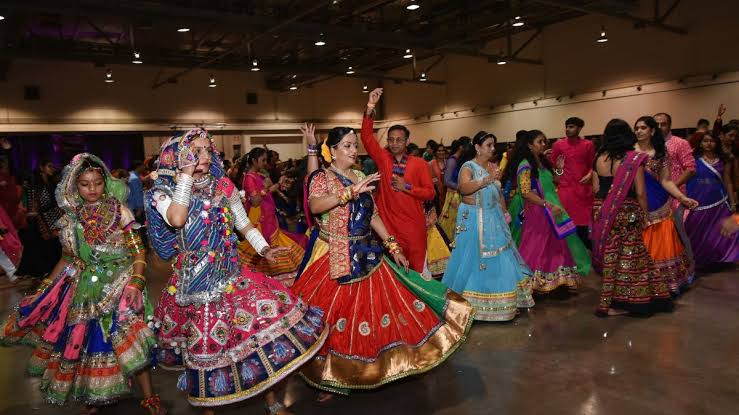
Gujarat is one of the most famous destinations for Navratri celebrations. Here, the festival transforms cities and towns into lively spaces filled with traditional music, colourful outfits and circular dance performances..Garba is performed in honour of the Goddess, often around a central lamp or an image of Amba Mata. The circular movement represents a sense of continuity and devotion. Dandiya Raas, performed with decorated sticks, is another popular feature of the celebrations..Ahmedabad and Vadodara are particularly well known for their Garba events. People wear traditional chaniya cholis, kediyu outfits and colourful accessories, and participate in community celebrations after evening prayers..
Cultural highlight: Garba and Dandiya Raas.
Where to experience it: Ahmedabad, Vadodara, Rajkot and other parts of Gujarat.
2. West Bengal: Durga Puja Becomes a Grand Cultural Celebration
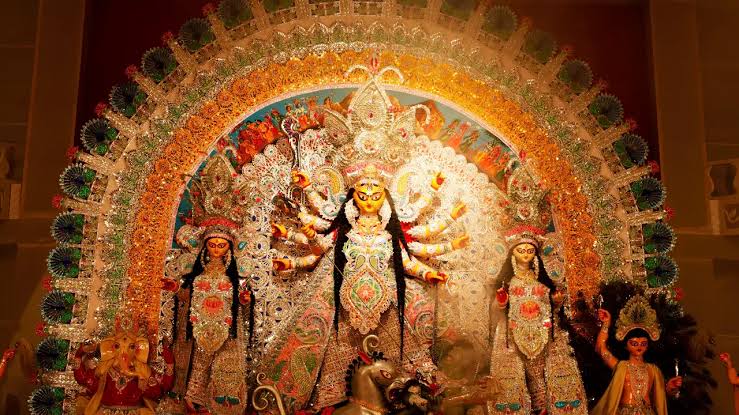
In West Bengal, especially Kolkata, the Navratri period is closely associated with Durga Puja. The celebration honours Goddess Durga and her victory over Mahishasura, symbolising the triumph of good over evil..Artists spend months creating elaborate pandals, sculpting idols and designing artistic installations. During the main days of Durga Puja, families visit pandals, attend rituals, enjoy cultural programmes and share traditional Bengali food..The celebrations reach a major emotional moment on Vijayadashami, when the idol immersion marks the Goddess’s ceremonial farewell. Sindoor Khela, associated with married women applying vermilion during the farewell rituals, is another well-known tradition...
Cultural highlight: Durga Puja pandals, traditional rituals and artistic idol-making.
Where to experience it: Kolkata, Howrah and other towns across West Bengal.
3. Karnataka: The Royal Grandeur of Mysuru Dasara
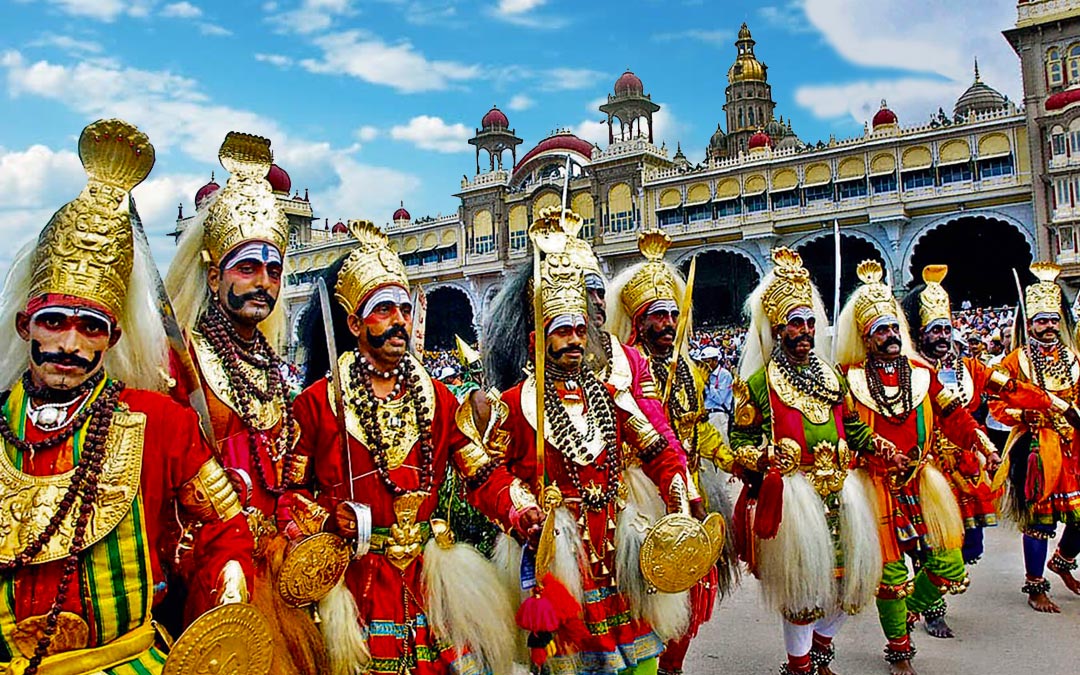
Karnataka celebrates the festival season through Mysuru Dasara, one of the state's best-known cultural events. Mysuru has a long royal association with Dasara, and the celebrations combine religious traditions, heritage and public festivities..Mysore Palace is illuminated during the festival period, creating a spectacular sight after sunset. Cultural performances, music programmes, exhibitions and the famous Vijayadashami procession are among the major attractions.The traditional procession, known as Jamboo Savari, features decorated elephants and ceremonial elements. Mysuru Dasara is especially significant because it connects the region's royal history with the worship of Goddess Chamundeshwari.
Cultural highlight: Royal procession, illuminated palace and Chamundeshwari worship.
Where to experience it: Mysuru, Karnataka.
4. Tamil Nadu: Golu and the Tradition of Displaying Dolls
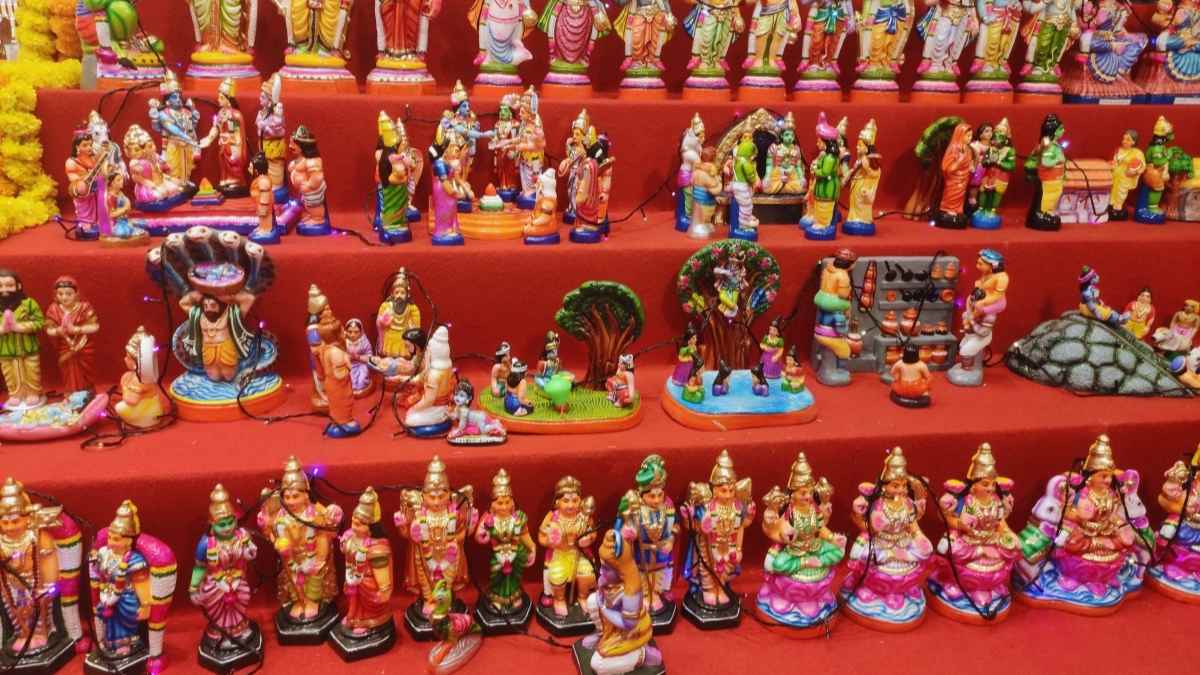
In Tamil Nadu, Navaratri has a distinctive household tradition known as Golu, also called Bommai Kolu. Families arrange dolls and figurines on specially constructed steps inside their homes..These displays may include deities, scenes from Hindu epics, village life, animals and traditional crafts. Families invite relatives and neighbours to view the arrangements, sing devotional songs and participate in prayers..Golu is not simply a decorative display. It is a way of passing cultural stories and traditions from one generation to another. In many households, women exchange gifts and invite guests for traditional refreshments.
Cultural highlight: Golu doll displays, devotional singing and family gatherings.
Where to experience it: Chennai, Madurai, Thanjavur and other parts of Tamil Nadu.
5. Telangana: Bathukamma, the Festival of Flowers
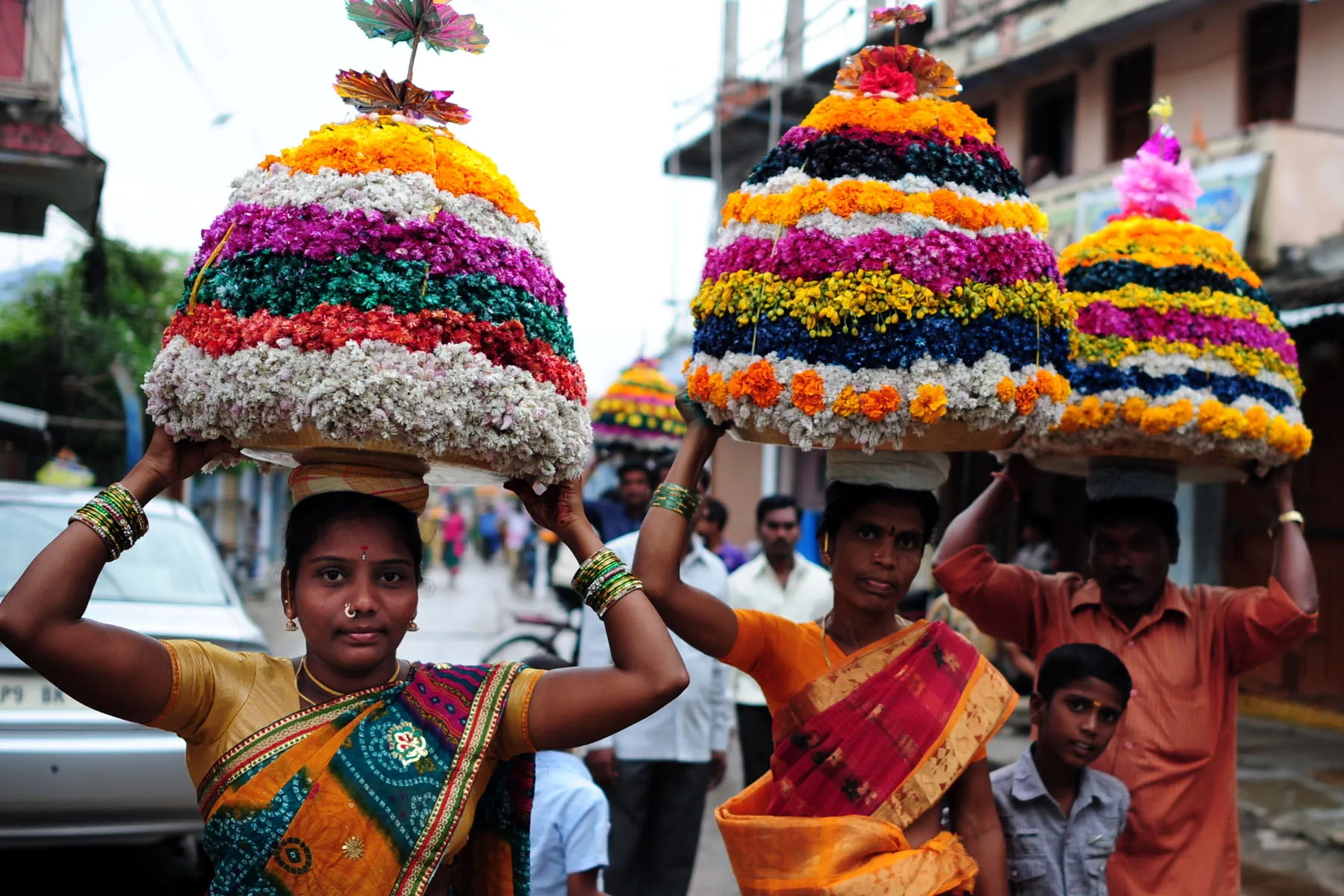
Telangana has a distinctive floral celebration called Bathukamma, observed during the Navratri season. It is a major cultural festival associated with flowers, women, community participation and devotion..Women arrange seasonal flowers in colourful, tiered formations called Bathukamma. They gather in groups, sing traditional songs and dance around the flower arrangements. The celebrations conclude with the ritual immersion of the floral structures in water..Bathukamma has its own regional identity and should not be confused with Garba or Durga Puja. Its emphasis on flowers, local songs and community gatherings makes it one of Telangana’s most recognisable cultural traditions.
Cultural highlight: Floral arrangements, traditional songs and group dances.
Where to experience it: Hyderabad, Warangal and other parts of Telangana.
6. Himachal Pradesh: Goddess Worship and the Unique Kullu Dussehra

In Himachal Pradesh, Navratri is observed through temple worship, fasting and devotion to different forms of the Goddess. The region's mountainous landscape is home to many local deities and distinctive temple traditions..Kullu is particularly famous for its Dussehra festival. Local deities are brought in decorated palanquins to participate in gatherings at Dhalpur Maidan. The festival is known for its processions, traditional music and the coming together of communities from the surrounding valleys..One important difference is that Kullu Dussehra begins on Vijayadashami and continues for several days. It is not simply a nine-night Garba celebration or a replica of the Ramlila traditions seen elsewhere in North India.
Cultural highlight: Local deity processions, traditional music and Himalayan religious customs.
Where to experience it: Kullu and other parts of Himachal Pradesh.
7. Uttar Pradesh and Delhi: Ramlila, Fasting and Ravan Dahan
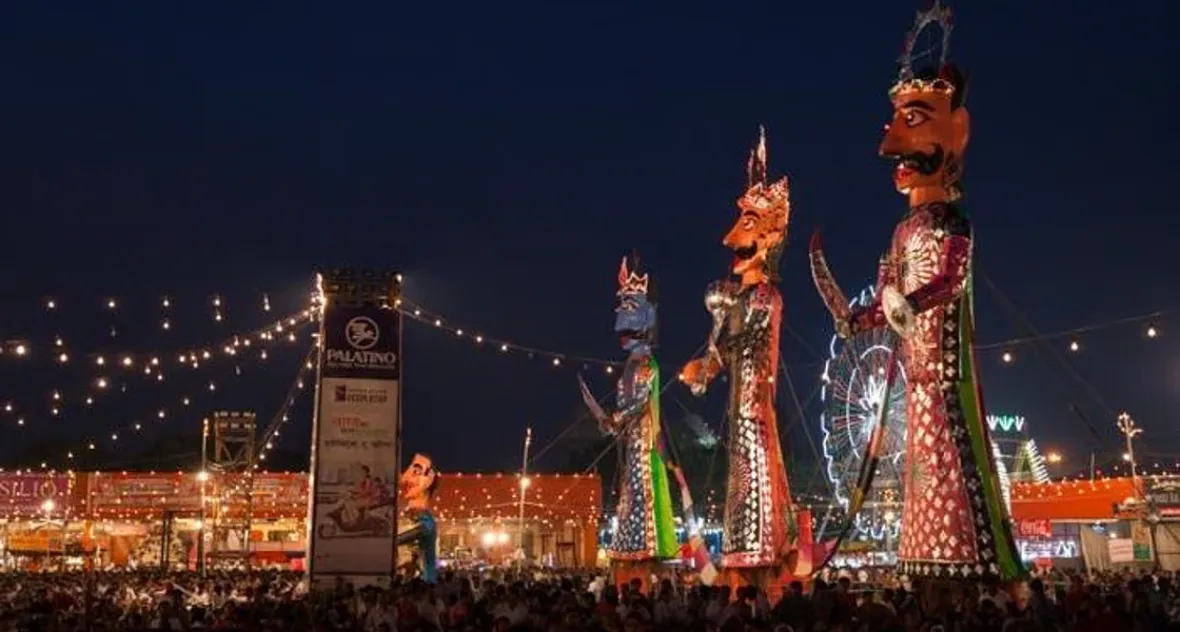
In much of North India, including Uttar Pradesh and Delhi, Navratri combines Goddess worship with the story of Lord Rama..Many families observe fasts, perform daily prayers and visit temples. During the festival, Ramlila performances bring episodes from the Ramayana to life through acting, costumes, music and dialogue..The celebrations reach a major public climax on Vijayadashami, when effigies of Ravana, Meghnath and Kumbhkaran are burned at many venues. The ritual symbolises the victory of good over evil and is connected with Lord Rama's victory over Ravana.
Delhi's Ramlila grounds and several towns in Uttar Pradesh attract large crowds during the festive period.
Cultural highlight: Ramlila performances, temple visits, fasting and Ravan Dahan.
Where to experience it: Delhi, Ayodhya, Varanasi, Lucknow and other parts of Uttar Pradesh.
8. Maharashtra: Ghatasthapana, Devi Worship and Garba
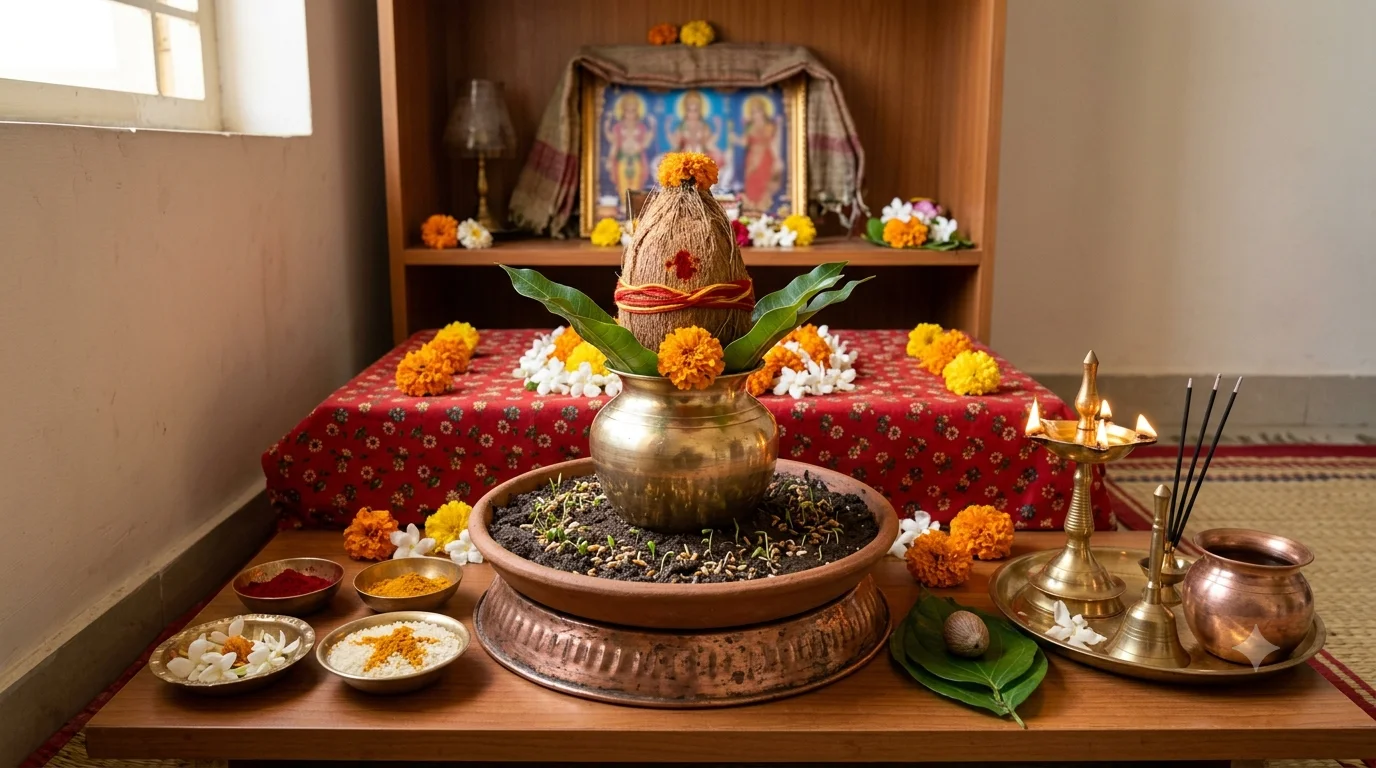
In Maharashtra, Navratri begins in many households with Ghatasthapana, a ritual involving the installation of a sacred pot or kalash. Families worship the Goddess, offer flowers and perform prayers throughout the festival..Garba and Dandiya events are also popular in cities such as Mumbai and Pune, reflecting the influence of Gujarati traditions and the diverse communities living in Maharashtra..The festival combines household rituals, temple visits, fasting and public celebrations. Customs can vary from family to family, and different communities may follow their own traditional practices.
Cultural highlight: Ghatasthapana, daily Devi worship and community Garba.
Where to experience it: Mumbai, Pune, Nashik and Kolhapur.
9. Kerala: Saraswati Puja and Vidyarambham
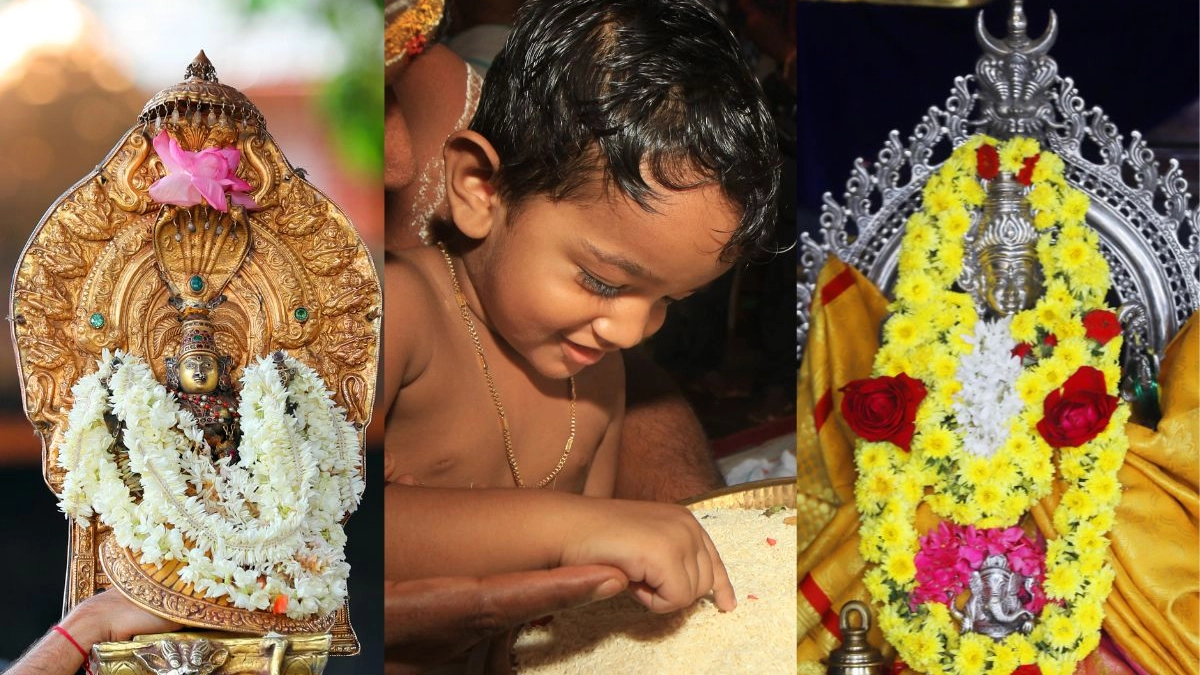
In Kerala, the final days of the Navratri period are particularly associated with Saraswati Puja, the worship of Goddess Saraswati, who represents knowledge, learning and the arts.
Books, musical instruments and other learning materials are placed for worship during the Poojavaipu tradition. On Vijayadashami, many families participate in Vidyarambham, a ceremony marking a child's introduction to learning.During Vidyarambham, a teacher or elder traditionally guides the child in writing their first letters, often using rice or another suitable surface. It is a meaningful cultural moment for families and is associated with the beginning of a child's educational journey.
Cultural highlight: Saraswati Puja, Poojavaipu and Vidyarambham.
Where to experience it: Thiruvananthapuram, Thrissur, Kochi and other parts of Kerala.
What Happens During the Nine Days of Navratri?
The nine days are traditionally associated with the worship of the nine forms of Goddess Durga, collectively known as Navadurga. Many devotees follow a daily prayer routine, observe fasts or make offerings. However, the exact rituals and the emphasis placed on each day vary by region and family tradition..
Why Does Navratri Look So Different Across India?
The diversity of Navratri reflects India's regional history. Some communities emphasise the Goddess's victory over Mahishasura, others focus on the story of Lord Rama, and some traditions give special importance to learning, local deities or seasonal flowers.
Music, food, clothing and public celebrations also reflect the cultures in which these traditions developed. That is why the same festive season can mean a Garba circle in Gujarat, a Durga Puja pandal in Bengal, a Golu display in Tamil Nadu or a Ramlila performance in North India.
Despite these differences, the festival brings together themes of devotion, community, renewal and the victory of good over evil.