


Petrol and diesel prices remained steady across major Indian cities on October 18, 2026, even as international crude oil markets continued to see volatility.
Oil marketing companies did not announce a fresh revision in the regular retail prices across the major cities tracked today. However, the price paid by consumers continues to differ from one city to another because of state taxes, local levies and other costs.
For motorists, that means there was no immediate relief or additional burden at the fuel station in most major cities on Sunday, but local rates remain important when calculating monthly travel expenses.
Petrol and Diesel Prices in Major Cities Today

As of October 18, the reported retail prices include:
New Delhi: Petrol ₹102.12 per litre; diesel ₹95.20 per litre.
Mumbai: Petrol ₹111.21 per litre; diesel ₹97.83 per litre.
Kolkata: Petrol ₹113.51 per litre; diesel ₹99.82 per litre.
Chennai: Petrol ₹107.76 per litre; diesel ₹99.55 per litre.
Bengaluru: Petrol ₹111.68 per litre; diesel ₹99.56 per litre.
Hyderabad: Petrol ₹116.15 per litre; diesel ₹104.23 per litre.
These rates include applicable local taxes and can vary considerably between states and cities.
Why Are Petrol and Diesel Prices Different Across Cities?
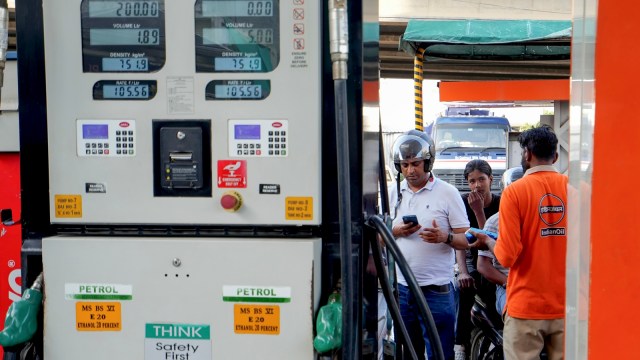
Fuel prices are not uniform across India because the final retail price depends on several components.
State-level taxes, particularly VAT and other local charges, play a significant role in determining what consumers pay. Freight and transportation costs can also contribute to differences between locations.
This is why the price of petrol in one metro can be noticeably higher or lower than in another, even when both cities are supplied through the same broad domestic fuel distribution network.
Crude Oil Prices Remain a Key Factor
The stability in domestic pump prices comes despite considerable movement in international crude oil markets.
Recent geopolitical tensions in the Middle East, including disruptions and security concerns around the Strait of Hormuz, have added uncertainty to global oil supplies and shipping. Brent crude has recently traded at elevated levels, increasing attention on the potential impact on fuel markets.
India imports a large share of its crude oil requirement. As a result, changes in international crude prices can influence the country's import bill and, depending on domestic pricing decisions and other factors, eventually affect fuel prices.
The rupee-dollar exchange rate is another important factor because crude oil is traded internationally in US dollars.
Why Have Domestic Fuel Prices Not Changed Despite Crude Volatility?
A rise or fall in international crude prices does not necessarily translate into an immediate change at Indian fuel stations.
The retail price also reflects taxes, refining and marketing costs, freight, currency movements and decisions by oil marketing companies.
Consequently, consumers may see stable petrol and diesel rates for a period even when international oil prices are moving sharply.
The recent trend illustrates this difference: fuel prices in major cities have remained broadly steady even as global crude markets have faced fresh supply concerns.
What Should Consumers Check Before Filling Up?
Motorists should check the latest local petrol and diesel rate for their city before refuelling, particularly when planning long-distance journeys.
Even a small difference in the price per litre can become significant for people who drive frequently or operate commercial vehicles.
For households managing monthly budgets, fuel costs are also closely linked to commuting, school travel, business travel and other regular expenses.
How Often Are Petrol and Diesel Prices Revised?
Oil marketing companies have followed a daily pricing system for petrol and diesel since June 2017, with prices generally updated around 6 am.
However, the actual retail price paid by consumers depends on the location and applicable taxes and charges.
This makes checking the city-specific rate more useful than relying only on a national average.
What Could Happen to Fuel Prices Ahead?
The direction of international crude oil prices will remain an important factor for the Indian fuel market.
Any prolonged disruption to oil supplies or shipping through key routes could keep global prices under pressure. At the same time, a decline in geopolitical tensions or an improvement in supply conditions could ease some of that pressure.
For Indian consumers, the impact will also depend on the rupee's movement against the US dollar and domestic pricing decisions.
For now, however, petrol and diesel prices in major Indian cities remain unchanged on October 18, 2026.