


Goddess Mahagauri associated with the color white Why?
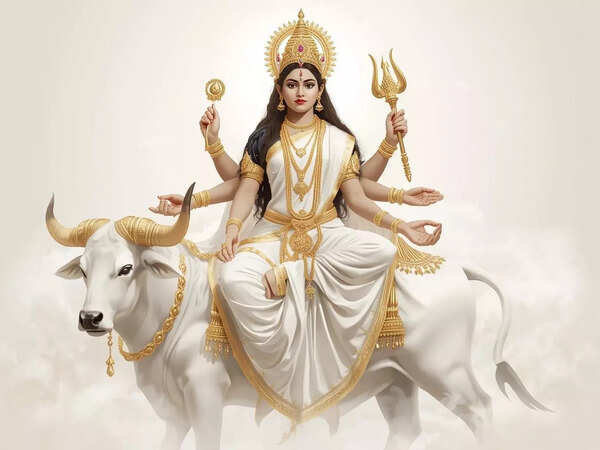
Among the nine forms of Goddess Durga, Goddess Mahagauri is known for her serene nature, white attire, and association with purity. Her name is generally interpreted to mean a goddess who is 'extremely radiant' or possesses a fair complexion.
In traditional depictions, she is shown with four arms, mounted upon a white bull. The combination of her calm expression and the powerful symbols inherent in the Navadurga tradition makes her a significant form during Navaratri.However, the story behind this particular form is even more compelling.
The Legend of Goddess Mahagauri
According to Hindu mythology, Goddess Parvati undertook rigorous penance (tapasya) to attain Lord Shiva as her husband. During this period, she led an extremely austere life, dedicating herself entirely to spiritual practice and discipline.
It is said that due to this arduous penance and the hardships she endured, her complexion turned dark. Later, through the grace of Lord Shiva, she regained her divine and radiant form, after which she came to be known as Mahagauri.
While the details of this narrative may vary slightly across different religious texts, the core essence remains one of devotion, firm determination, and spiritual transformation..
What does this white form symbolize?
The color white holds special significance In the traditional depiction of Goddess Mahagauri. it is generally regarded as a symbol of clarity, peace, and purity.This form teaches devotees how to maintain a calm mind, even amidst the challenging circumstances of life. Rather than focusing solely on outward appearances, this form can be understood as a symbol of inner discipline and spiritual growth.This is why she holds a special place in the worship traditions of the Navadurga.
Why is Goddess Mahagauri worshipped during Navaratri?
Maa Mahagauri is considered the eighth manifestation of Navdurga and is worshipped on the eighth day of Navratri .Devotees offer flowers, prayers and traditional bhog to the Goddess. it is also customary to offer a coconut to the Goddess, though the specific items offered as 'bhog' may vary from region to region .
Across North India many families worship of young girls. This holds special significance on the day of Ashtami. young girls are revered as embodiments of the Goddess, and a meal consisting of puri, halwa, and chana is prepared in households. This tradition reflects a profound respect for feminine power and the inherent purity associated with childhood.
Maa Mahagauri's Spiritual Message
Maa Mahagauri illustrates the connection between transformation and perseverance. Her association with rigorous penance conveys the message that any meaningful change requires patience and dedication. worshipping the mahagauri serves as an opportunity to reflect, pause upon their own conduct, and reaffirm their commitment to values such as compassion, peace and self-restraint For devotees.
Her significance extends beyond mere rituals she represents a that honors spiritual devotion, tradition and celebrates the diverse manifestations of Shakti.