


Apple Pay Has Arrived in India
After years of waiting, Apple's mobile payment service has officially launched in India.
As of September 30, 2026, Apple Pay is available on iPhone, iPad and Apple Watch in India, while Mac support is expected to follow. At launch, the service supports eligible Axis Bank-issued Visa and Mastercard credit cards.
The launch gives Indian iPhone users another way to pay — particularly at contactless card terminals, in supported apps and on participating websites.
But there is an important distinction: Apple Pay's Indian launch is currently centred on card payments, not UPI. The initial rollout therefore does not replace the UPI apps and bank accounts that many Indians use for everyday payments.
What Is Apple Pay?
Apple Pay is Apple's digital payment service that allows users to add supported bank cards to Apple Wallet and use their Apple devices to make payments.
Instead of taking out a physical card, users can authenticate a payment using Face ID, Touch ID or their device passcode and then tap their iPhone or Apple Watch against a compatible contactless payment terminal.
Apple says the service can also be used for purchases in apps and on the web, where participating merchants offer Apple Pay as a payment option.
Which Cards Work With Apple Pay in India?
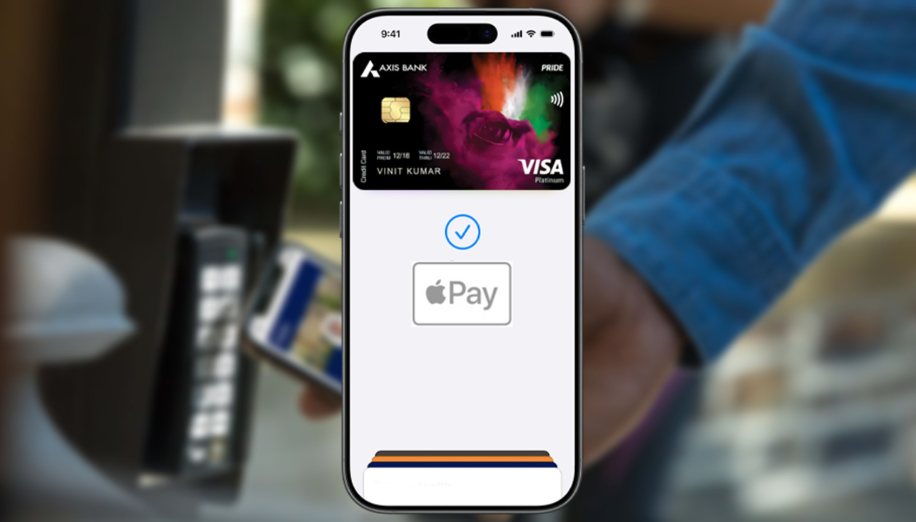
This is one of the most important limitations at launch.
Currently, Apple lists eligible Axis Bank Visa and Mastercard credit cards as the supported cards in India. The list is expected to expand as additional banks are added.
That means simply owning an iPhone is not enough to start using Apple Pay.
You also need a supported card from a participating issuer.
At launch, RuPay cards are not part of the supported card list, and other major Indian banks have yet to be added to Apple's official list.
How to Set Up Apple Pay on an iPhone
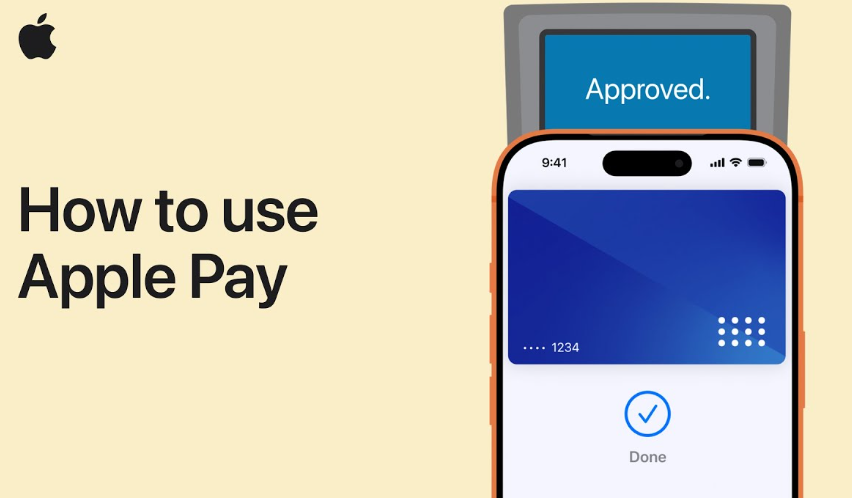
Setting up Apple Pay is relatively straightforward.
Eligible Axis Bank cardholders can add their card through the latest version of the Axis Bank app. Alternatively, users can open the Wallet app on their iPhone, tap the plus (+) button, and follow the instructions to add an eligible card.
Once the card has been verified and added, it becomes available for Apple Pay transactions.
The important requirement is that the card itself must be eligible.
How Will You Pay at a Store?
The process is designed to be faster than entering card details manually.
For an in-store payment:
- Double-click the iPhone's side button.
- Authenticate using Face ID, Touch ID or the device passcode.
- Hold the top of the iPhone near the contactless payment terminal.
- Wait for the payment confirmation.
On Apple Watch, users can similarly authenticate and hold the watch near a compatible contactless reader.
Apple says Apple Pay works wherever compatible contactless payments are accepted.
What About Online and In-App Payments?
Apple Pay is not limited to physical stores.
At participating merchants, users can select Apple Pay during checkout and confirm the transaction without repeatedly entering card numbers, billing details and other payment information.
Apple says Indian users can use the service for purchases in apps and on the web, while support for Mac is coming soon.
This could make checkout particularly convenient for users who regularly shop or order through supported apps and websites.
Is Apple Pay Replacing UPI?
No — at least not in its current Indian form.
India's digital-payment ecosystem is heavily built around UPI, which allows users to make account-to-account payments through banks and UPI apps.
Apple Pay's initial Indian rollout is different. It is primarily a digital wallet for supported payment cards, allowing users to make card-based payments through Apple devices.
In practical terms, an iPhone user can continue using UPI apps while also using Apple Pay for an eligible card.
Apple itself has described Apple Pay as complementary to India's existing payment ecosystem rather than a replacement for UPI.
Why Is Apple Pay's Security Getting Attention?
Security is one of Apple's major selling points for Apple Pay.
When a supported card is added, the actual card number is not stored on the device or on Apple's servers for use in transactions. Instead, Apple uses a unique Device Account Number and security technology built into the device to protect payment credentials.
For supported Mastercard and Visa cards, tokenisation also means the merchant does not receive the actual card number during an Apple Pay transaction.
This is designed to reduce the exposure of the physical card details during payments.
Do You Still Get Your Card Rewards?
Yes.
Apple says users continue to receive the rewards and benefits associated with their eligible cards when using Apple Pay.
So if an eligible credit card normally provides reward points or other benefits on qualifying purchases, using the card through Apple Pay does not by itself remove those benefits.
The exact reward eligibility, however, remains subject to the card issuer's terms.
Where Can Apple Pay Be Used in India?
Apple says Apple Pay is accepted at millions of merchants in India, including participating physical stores, apps and websites.
At launch, Apple highlighted merchants and brands including Apple Store, Blinkit, Croma, Ixigo, Reliance brands, Tata 1mg and Zomato, among others. The availability depends on the merchant's payment setup and support for Apple Pay or compatible contactless payments.
The key thing to look for in a physical store is support for contactless/NFC payments.
Which iPhones Support Apple Pay?
Apple's India launch information states that Apple Pay requires iPhone XR or later with iOS 18 or later.
Apple Watch Series 6 or later is supported when paired with a compatible iPhone.
Users should also make sure their devices are updated to supported software versions before attempting to add a card.
What Has Actually Changed for Indian iPhone Users?
The biggest change is simple: an iPhone can now function as a secure digital wallet for supported Indian payment cards.
Previously, Indian iPhone users could use their cards through various apps and online payment systems, but Apple's own contactless wallet service was not officially available in the country.
With Apple Pay, users can now add eligible Axis Bank cards directly to Apple Wallet and use them across supported contactless, app and web transactions.
For people who already prefer card payments, this creates another option that is integrated directly into Apple's ecosystem.
What Is Still Missing?
The launch is significant, but it is also relatively limited at this stage.
The initial rollout supports only eligible Axis Bank Visa and Mastercard credit cards. Other banks and card networks will need to be added before Apple Pay becomes broadly available to India's large population of card users.
Mac support is also still listed as coming soon.
And for users who primarily rely on UPI, Apple Pay does not currently replace the account-to-account payment experience that UPI provides.
The Bigger Picture
Apple Pay's arrival comes at a time when India already has one of the world's most developed digital-payment ecosystems.
That makes Apple's strategy particularly interesting.
Rather than entering an empty market, Apple is introducing its established global wallet platform into a country where UPI, contactless cards and mobile banking are already deeply embedded in everyday transactions.
The initial partnership with Axis Bank provides Apple with a starting point, while the future expansion of banks and card networks will determine how widely Apple Pay is adopted.
For iPhone users, however, the immediate change is straightforward: eligible Axis Bank Visa and Mastercard credit cards can now be added to Apple Wallet and used through Apple Pay in India.
Official Apple Pay information: Apple Pay India