


Gold Loses Its Shine in 2026: Why Are Gold Prices Falling?
Gold has always carried a special place in the minds of investors.
For generations, it has been seen as a store of value, a hedge during uncertain times, and an asset people often turn to when financial markets become uncomfortable.
But 2026 has reminded investors of something equally important:-
Gold can fall too.
After a spectacular rally earlier in the year, gold has recently faced a sharp correction. September has been particularly difficult, with Reuters reporting that spot gold was set for a roughly 6% monthly decline as investors reassessed the outlook for U.S. interest rates.
So, what changed?
From Record Highs to a Sharp Pullback
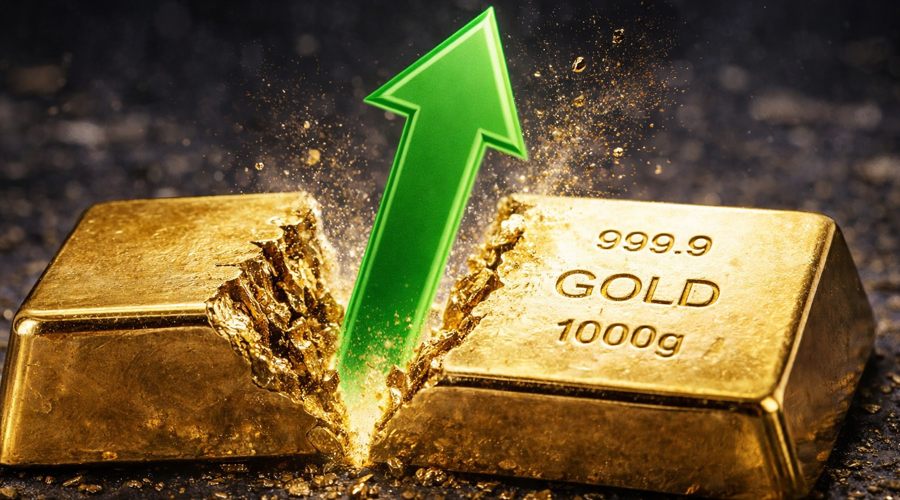
Gold's journey through 2026 has been anything but ordinary..
The metal enjoyed strong momentum earlier in the year and continued to attract investors during periods of economic and geopolitical uncertainty. The World Gold Council reported that gold gained 13% in August alone, ending the month around $4,563 per ounce.
But the mood changed quickly.
By late September, gold had fallen sharply as U.S. Treasury yields climbed and markets began expecting further interest-rate increases from the Federal Reserve.
Reuters reported on September 28 that gold dropped as much as 4% to around $4,111 per ounce, with higher Treasury yields and expectations of additional Fed rate hikes reducing the appeal of an asset that does not itself pay interest.
For investors who watched gold climb earlier in the year, the reversal has been a reminder that even traditionally defensive assets can experience large swings.
Why Do Higher Interest Rates Hurt Gold?
This is one of the most important pieces of the puzzle.
Gold does not pay interest or dividends..
That means investors compare it with other assets when deciding where to put their money.
When government bonds offer increasingly attractive yields, some investors may become less willing to hold an asset that produces no regular income.
This is known as opportunity cost.
Imagine you have two choices.
You can hold gold, which does not pay interest.
Or you can hold a relatively safe government bond that offers a higher yield.
When bond yields rise, the second option can become more attractive to some investors.
That doesn't automatically mean everyone will sell gold. But it can reduce demand at the margin and put pressure on its price..
The U.S. Bond Market Is Playing a Big Role
The recent move in gold cannot be understood without looking at the U.S. Treasury market.
In late September, the 10-year U.S. Treasury yield climbed above 5%, reaching levels not seen since 2007. Reuters also reported that the 30-year Treasury yield reached 5.62%.
Higher yields can make interest-bearing assets more appealing compared with gold.
At the same time, rising yields have been connected with changing expectations about U.S. monetary policy.
The market is watching inflation and economic data closely because stronger inflation can make it harder for the Federal Reserve to lower rates—and can increase expectations for additional tightening.
That uncertainty has become an important driver of gold's recent volatility..
The Stronger Dollar Adds Another Challenge
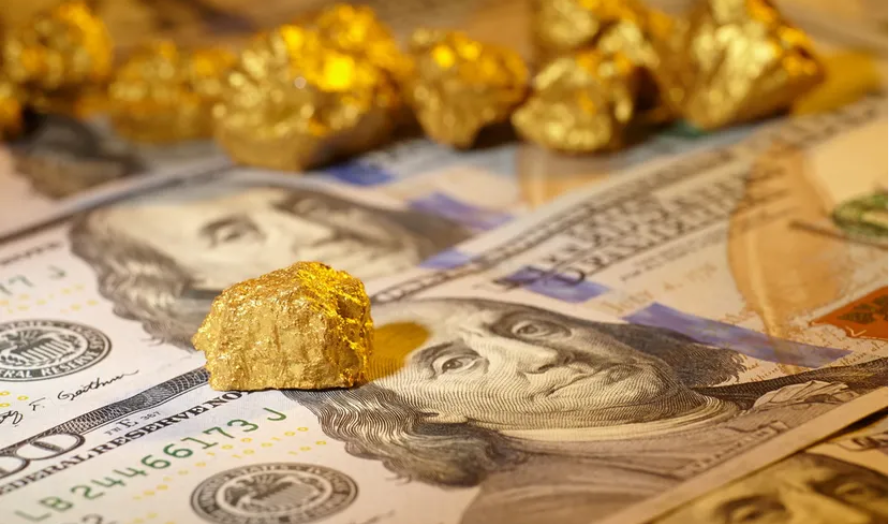
Gold is generally priced internationally in U.S. dollars.
When the dollar strengthens, gold can become more expensive for buyers using other currencies.
That can put additional pressure on demand.
Reuters noted that the strengthening U.S. dollar has contributed to the recent pressure on gold prices.
For Indian investors, this relationship becomes especially interesting because the domestic gold price is influenced not only by international gold prices but also by the rupee-dollar exchange rate, along with taxes, duties, and local market conditions.
So, a fall in international gold prices does not necessarily translate into the same percentage fall in Indian gold prices..
Is Gold No Longer a Safe-Haven Asset?
Not necessarily.
This is where the story becomes more complicated.
Gold is often called a safe-haven asset, but "safe haven" does not mean "price can never fall."
Gold can decline even during periods of geopolitical uncertainty if other market forces—such as interest rates, bond yields, currency movements, liquidity needs, or investor positioning—become stronger influences.
Recent market action is a good example..
Despite geopolitical concerns, rising yields and expectations of tighter U.S. monetary policy have created significant pressure on gold.
In other words, several forces can pull gold in different directions at the same time..
What About Gold's Strong Start to 2026?
The recent correction should also be viewed in the context of gold's earlier gains.
The World Gold Council's research shows that gold's performance has been influenced by several factors, including geopolitical risk, dollar movements, interest rates, investment flows, economic conditions, and momentum.
That matters because a market that rises rapidly can become vulnerable to profit-taking.
When sentiment changes, investors who bought earlier may decide to lock in gains, while new buyers may wait for clearer signals.
That can make the correction feel much sharper..
What Should Indian Investors Understand?

For Indian households, gold is not simply another financial asset.
Gold has cultural, emotional, and practical importance.
People buy it for weddings, festivals, family traditions, savings, investment, and sometimes simply because they feel comfortable owning something tangible.
But that doesn't mean every gold purchase is automatically a good investment.
There is a difference between buying jewellery for personal use and investing in gold for portfolio diversification.
Jewellery includes making charges and other costs, which can make it different from investment products such as gold ETFs or other regulated forms of gold exposure.
Investors should therefore consider why they are buying gold before focusing only on whether its price is rising or falling.
Should You Be Worried About the Current Fall?
A falling price can understandably make investors nervous.
But a short-term decline does not, by itself, tell us what gold will do over the long term.
The bigger question is what happens to the factors that currently influence the market.
If U.S. interest rates and Treasury yields remain elevated, gold could continue to face pressure.
If inflation cools, yields decline, the dollar weakens, or investors once again increase demand for defensive assets, the environment could become more supportive for gold.
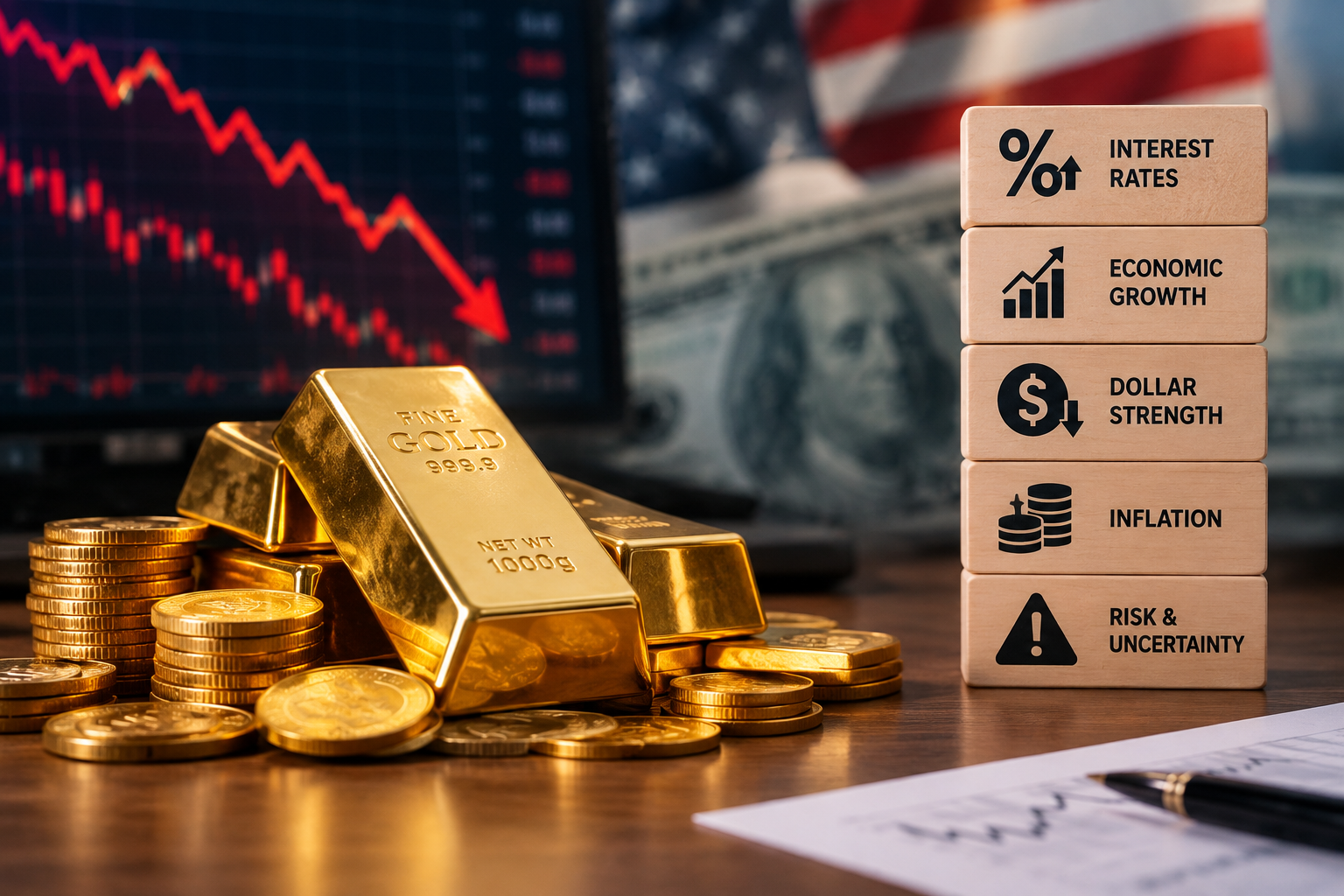
The World Gold Council has also highlighted how different combinations of interest rates, economic growth, currency movements, risk and uncertainty can produce very different outcomes for gold.
Nobody can know with certainty which scenario will dominate.
The Bigger Lesson for Investors
Perhaps the biggest lesson from gold's 2026 journey is simple:
No investment moves in one direction forever.
Gold can be a useful diversification asset for some investors, but it is not a guaranteed source of returns..
Instead of reacting emotionally to every price movement, investors can look at the bigger picture:
- What is happening with interest rates?
- Are bond yields rising or falling?
- What is happening with the U.S. dollar?
- How is inflation behaving?
- Are central banks buying gold?
- Are investors moving money into or out of gold-backed products?
- What is happening in the global economy?
These factors can provide more context than simply looking at whether gold is green or red on a particular day..
Final Thoughts
Gold's shine may have dimmed in recent weeks, but that doesn't mean the gold story is over.
The metal remains closely watched by investors around the world, and its price is being pulled in different directions by interest rates, bond yields, currencies, economic expectations, geopolitical risks, and investment demand..
For ordinary investors, the important thing is not to treat every fall as a disaster—or every rally as a guarantee of future gains..
Gold is an asset, not a promise.
Understanding why its price moves can be far more valuable than simply watching the price itself.
Note: This article is for informational and educational purposes only and is not investment advice. Gold prices can be volatile, and past performance does not guarantee future returns.