


In the heart of Delhi's Qutub complex stands an iron pillar that has fascinated visitors and researchers for generations. Made more than 1,600 years ago, this remarkable monument is famous for its resistance to atmospheric corrosion. While ordinary iron can rust when exposed to moisture and oxygen, much of this pillar's surface has survived remarkably well..The pillar is not a modern invention or a mysterious object from an unknown civilisation. It is an extraordinary example of ancient Indian metalworking, offering clues about the technical knowledge of the people who created it..But who built it, why was it originally made, and what makes its iron so resistant to rust?
Where Is Delhi's Iron Pillar?
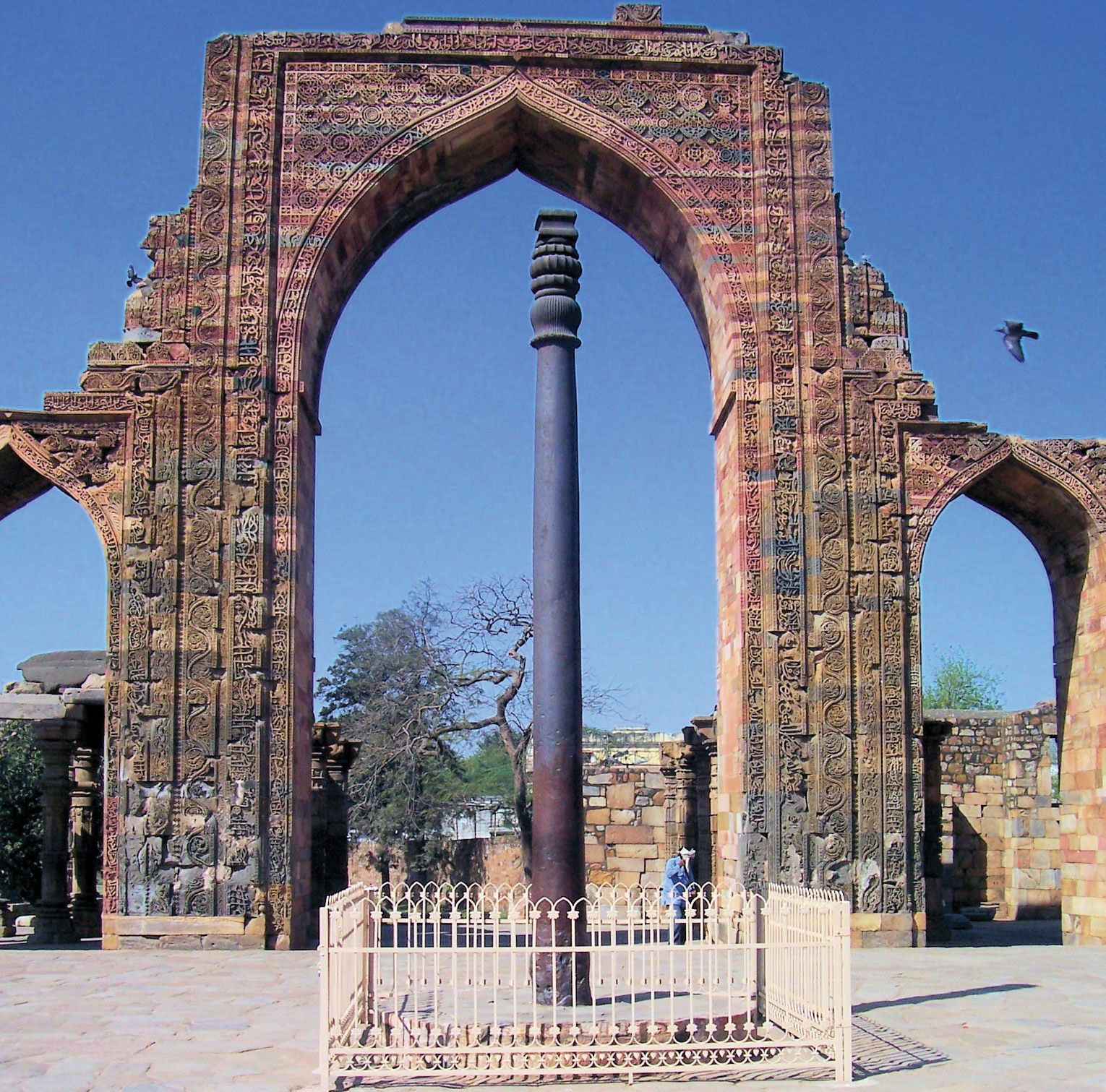
The Iron Pillar stands inside the Qutub complex in Mehrauli, Delhi, near the famous Qutub Minar. It is approximately 7.2 metres tall above ground, including its decorative capital, and weighs several tonnes..The pillar is made primarily of wrought iron and carries an inscription in Sanskrit written in the Brahmi script. Its inscription is an important source for understanding its history, although it does not answer every question about the monument's original location..
Who Built the Iron Pillar?
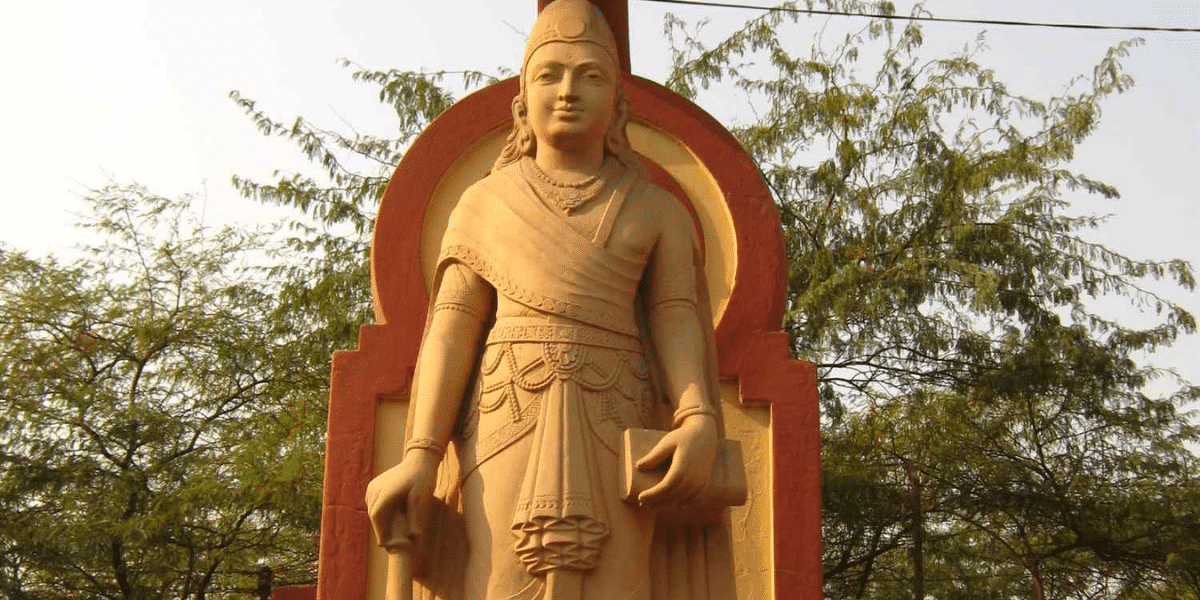
The inscription refers to a powerful king named Chandra, widely identified by historians with Chandragupta II of the Gupta dynasty, who ruled in the late 4th and early 5th centuries CE.It praises the king's achievements and describes the erection of a pillar in honour of Vishnu. This association is one reason the monument is often described as a Vishnu pillar..The inscription does not simply provide a modern-style construction record. Historians interpret its language alongside other historical evidence to identify the ruler and understand the monument's purpose..
Was the Iron Pillar Always in Delhi?
Researchers have debated whether the pillar originally stood at its present location or was moved there later. The inscription connects it with Vishnu worship, and some interpretations suggest that it may originally have been erected at a different religious site before reaching the Qutub complex..Its precise early history remains a subject of scholarly discussion. It is therefore safer to say that the pillar is now at the Qutub complex and that its original location has not been established with complete certainty.
The Biggest Question: Why Has It Resisted Rust?
The pillar's corrosion resistance is the feature that attracts the most attention. The answer is not magic or a completely rust-proof metal. It lies largely in the composition of the iron and the protective layer that developed on its surface..Scientific studies have found that the pillar's iron contains relatively high levels of phosphorus compared with many modern structural irons. Its manufacturing process and exposure to the atmosphere helped form a thin, protective layer of corrosion products..This layer slows further corrosion under suitable environmental conditions. It does not mean the pillar can never corrode; rather, its material and surface chemistry have helped it survive remarkably well.
What Did Ancient Indian Metalworkers Know?
Producing a large iron pillar required considerable skill. Ancient metalworkers had to make and join iron pieces, control heating and hammering, and shape the material into a stable monument.The pillar demonstrates that sophisticated ironworking existed in India during the Gupta period. Its survival provides researchers with an opportunity to study historical manufacturing techniques and the relationship between metal composition and corrosion..It would be misleading, however, to claim that ancient metalworkers understood corrosion in exactly the same scientific terms used today. Their achievement can be recognised without assuming they had modern laboratory knowledge..
Is the Iron Pillar Completely Rust-Free?
No. The popular description that the pillar has never rusted is an exaggeration. Its surface has experienced corrosion, but the corrosion has been limited compared with what might be expected from ordinary iron exposed to the atmosphere for such a long period..Environmental conditions, the pillar's composition and the formation of protective corrosion products all contribute to its durability..The monument is therefore an important example of corrosion resistance not proof that ancient iron could never rust..
Why Is the Iron Pillar Important Today?
The pillar matters for more than its unusual resistance to corrosion. Its inscription offers evidence about the Gupta period, while its material provides information about ancient iron production..It also shows why historical monuments should be studied through several disciplines. Archaeology can investigate its context, epigraphy can interpret its inscription, and materials science can examine the iron and its corrosion Chandragupta, these approaches reveal a more complete picture than legends alone can provide..
Can You Visit the Iron Pillar?
Yes. The Iron Pillar is inside the Qutub complex in Delhi, which also contains the Qutub Minar and other historic structures. Visitors should check current entry fees, opening hours and access information through official tourism or monument-management sources before planning a visit..