


Thousands of years ago, people living in Dholavira had already developed ways to collect and store water.Their city stood in the dry landscape of Gujarat, yet it survived for centuries. Its story is not just about ancient ruins. It is about how people planned their homes, managed a precious resource and built a community that still fascinates archaeologists today.
A City Hidden in the Rann of Kutch

Dholavira is located on Khadir Island in the Great Rann of Kutch, Gujarat. It was one of the important urban settlements of the Harappan Civilisation, which flourished thousands of years ago across parts of present-day India and Pakistan.
Archaeological evidence shows that people lived here from around 3000 BCE to 1500 BCE, although the city changed considerably over that period. Its long history gives us a glimpse into how an ancient community grew, developed and eventually declined.
The site was brought to archaeological attention in 1968. Later, excavations led by the Archaeological Survey of India, particularly under archaeologist R. S. Bisht, uncovered the remains of the settlement and revealed how carefully it had been planned.
What emerged was not a collection of randomly built houses. Dholavira had organised streets, large defensive walls, different sections of the city and impressive water structures.
How Did People Manage Water Without Modern Technology?
This is where Dholavira becomes truly fascinating.Water was a limited resource in this dry region. The people could not simply rely on regular rainfall throughout the year. Instead, they developed a system to collect and store available water.
The city had large reservoirs, channels and other water-management structures. Seasonal streams near the settlement provided water, while the city’s layout helped people make better use of what was available.
Some reservoirs were cut into rock, while others were built using carefully arranged materials. These structures allowed water to be collected and kept for later use.
Think about what this required: planning, knowledge of the local landscape and cooperation among the people who built and maintained the system. There were no electric pumps or modern water-treatment plants, yet the inhabitants found ways to adapt to their environment.
Dholavira’s water system is one of the main reasons archaeologists consider it an outstanding example of Harappan engineering.
The City Was Carefully Planned
Dholavira was not famous for water management alone. Its buildings and layout also reveal a high level of organisation.
The settlement included a fortified upper area, a middle town and a lower town. Strong walls and gateways marked different sections, while streets and residential areas formed part of a planned urban design.
Archaeologists have also found evidence of workshops where craftspeople made beads and other objects. Jewellery, pottery, tools and items made from materials such as copper, shell and semi-precious stones tell us that people here had specialised skills.
Evidence of trade also connects Dholavira with other Harappan settlements and regions beyond them. The city was part of a wider network through which goods and ideas could travel.
In other words, Dholavira was not simply a place where people lived. It was a working city with craftspeople, trade, organised spaces and systems designed to support daily life.
What Happened to Dholavira?
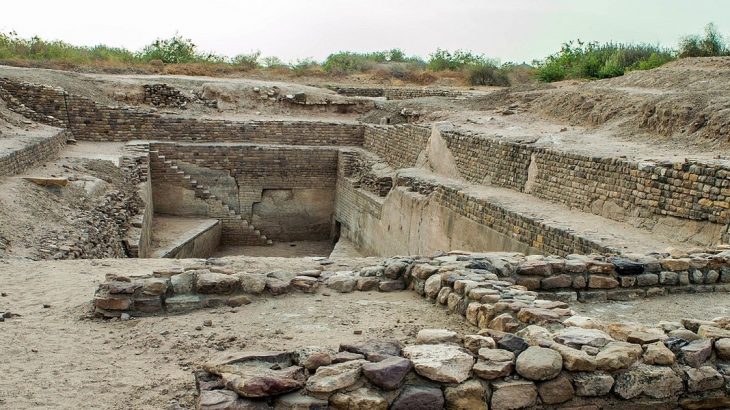
Like other Harappan cities, Dholavira did not remain unchanged forever.Over many centuries, the settlement went through different phases of growth and decline. Archaeological evidence shows changes in its buildings and layout, followed by a gradual reduction in urban life.
The exact reasons behind the decline of Harappan cities are still studied by researchers. Changes in climate, water availability, trade and settlement patterns may all have played a role in different places. It would be misleading to claim that one single event definitely destroyed Dholavira.
What is clear is that its story reflects the challenges faced by a community living in a dry environment over a very long period.
Why Is Dholavira Important Today?
In 2021, Dholavira was added to the UNESCO World Heritage List. It became recognised internationally for its importance in understanding the Harappan Civilisation, including its urban planning, construction and water-management systems.
Today, visitors can see the remains of the ancient settlement and imagine what life might have looked like thousands of years ago. The walls, reservoirs and streets are reminders that people in the distant past developed practical solutions to the problems around them.
Dholavira also offers a lesson that remains relevant today. Water conservation is not a new idea invented by modern cities. People in ancient India understood that survival depended on using limited resources wisely.
Thousands of years later, their work still tells a powerful story: a successful city needs more than impressive buildings. It needs planning, shared effort and a thoughtful relationship with its environment.