


India's historical monuments are often photographed for their architecture, scale and beauty.
But look beyond the walls and domes, and many of these places reveal something much more interesting. Some were built as expressions of love. Others were created to demonstrate imperial power. Some became abandoned cities, while others survived wars, political changes and centuries of neglect. A monument can therefore tell a story that goes far beyond the stone from which it was built. From the Taj Mahal in Agra to the ruins of Hampi and the ancient Buddhist complex at Sanchi, here are 10 historical monuments and the fascinating stories behind them..
1. Taj Mahal: A Monument Born From Grief and Love
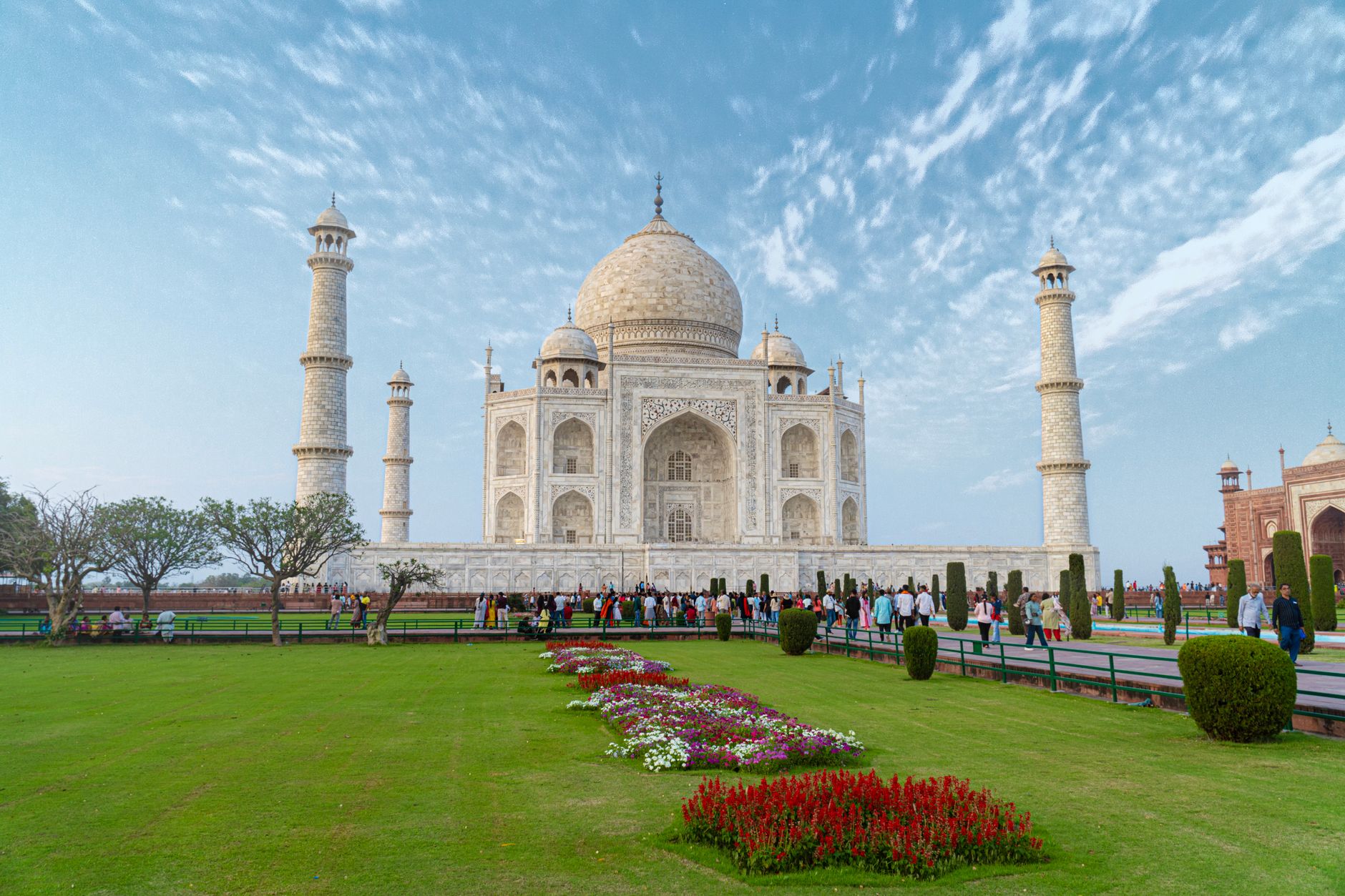
Few monuments in the world are as closely associated with a personal story as the Taj Mahal The white-marble mausoleum in Agra was commissioned by Mughal emperor Shah Jahan following the death of his wife Mumtaz Mahal in 1631. Construction began that year and the principal mausoleum was completed in 1648. Mumtaz Mahal died while giving birth to their fourteenth child, and historical accounts of Shah Jahan's grief became closely connected with the story traditionally associated with the Taj Mahal. But the monument was not simply a single building. The complex brought together a mausoleum, gardens, mosque, guest house and other architectural elements in a carefully planned composition. Its design also reveals how Mughal architecture developed through the blending of Persian, Central Asian, Islamic and Indian traditions. The marble came primarily from Makrana in Rajasthan, while decorative stones were brought from different regions. One lesser-known chapter came much later. During the upheaval of 1857, parts of the Taj Mahal were damaged and decorative stones were removed from some areas. A major restoration programme was later undertaken under Lord Curzon in the early 20th century. So the Taj Mahal is not only a love story. It is also a story of empire, craftsmanship, destruction, restoration and survival..
2. Hampi: The Great City That Fell and Was Abandoned

Today, Hampi looks like a vast landscape of temples, stone structures, pillars and ruins. But centuries ago, it was the heart of one of the most powerful kingdoms in South India. Hampi was the capital of the Vijayanagara Empire, which flourished between the 14th and 16th centuries.The scale of the city was extraordinary. UNESCO notes that more than 1,600 surviving remains are spread across the site, including temples, palaces, fortifications, markets, water structures and other buildings. Then came 1565. The Vijayanagara forces were defeated by a coalition of Deccan sultanates. Hampi was subsequently pillaged for months, after which the city was abandoned as a major urban centre. That history makes walking through Hampi unusual. The ruins are not simply the remains of old temples. They are fragments of a once-thriving capital city. Markets, royal complexes, religious structures and water systems reveal how sophisticated the urban centre had become. The famous monuments of Hampi therefore tell two stories at once: the rise of a powerful empire and the dramatic collapse of its capital..
3. Fatehpur Sikri: Akbar’s Capital That Lasted Only About a Decade

Not far from Agra stands Fatehpur Sikri, a magnificent Mughal city built during the reign of Emperor Akbar. Akbar made Fatehpur Sikri his capital, and the city was constructed primarily between 1571 and 1573. Yet the Mughal capital remained there for only around a decade before the court moved to Lahore in 1585. That makes Fatehpur Sikri one of India's most fascinating examples of an ambitious capital city that did not remain the empire's long-term political centre. The complex contains palaces, administrative buildings, religious structures and public spaces.
Its architecture also reflects the cultural environment of Akbar's court, combining Indian and Islamic architectural traditions. One of the most recognisable structures is Buland Darwaza, or the "Lofty Gate". UNESCO notes that it was completed in 1575 to commemorate Akbar's victory in Gujarat.
The city may have had a short political life, but its architecture survived to tell the story of Akbar's imperial vision..
4. Humayun’s Tomb: The Monument That Helped Inspire the Taj Mahal

When people think about Mughal architecture, the Taj Mahal usually comes first. But several decades earlier, another Mughal monument had already introduced an architectural idea that would become extremely influential. Humayun's Tomb in Delhi was commissioned by Empress Bega Begum after the death of Emperor Humayun. The monument is widely recognised as the first major garden-tomb on the Indian subcontinent. Its large-scale use of red sandstone, symmetrical gardens and monumental design represented an important stage in the evolution of Mughal architecture. The monument later became part of the architectural lineage that led to increasingly sophisticated Mughal tombs, eventually culminating in the Taj Mahal. That makes Humayun's Tomb more than the resting place of a Mughal emperor. It represents an important turning point in the history of Indian architecture..
5. Sanchi Stupa: An Ancient Buddhist Centre That Survived for Centuries

The story of Sanchi begins far earlier than many of India's famous medieval monuments.
Located in Madhya Pradesh, the Buddhist monuments at Sanchi include stupas, temples, monasteries and pillars dating across several centuries. UNESCO describes Sanchi as the oldest Buddhist sanctuary in existence, with monuments that document the development of Buddhist architecture and art from the 3rd century BCE onward. The site is particularly associated with Emperor Ashoka. According to UNESCO, Sanchi's Buddhist tradition continued to develop under later dynasties, including the Shungas, Kushanas, Kshatrapas and Guptas. One of the most remarkable features is Stupa 1 and its beautifully carved gateways. These gateways depict scenes, symbols, plants, animals and stories connected with Buddhist traditions. The interesting part is that early Buddhist art at Sanchi often represented the Buddha indirectly through symbols rather than portraying him in human form. The monument therefore provides a rare visual record of how Buddhist art evolved over time..
6. Qutub Minar: A Monument Built in a Changing Delhi

The Qutub Minar is one of Delhi's most recognisable historical landmarks. Its construction is associated with the establishment of the Delhi Sultanate and began under Qutb-ud-din Aibak, with later rulers contributing to the complex. But the story of the Qutub complex is not limited to the minaret. The surrounding archaeological complex contains structures from different phases of Delhi's history, reflecting political changes and architectural developments over centuries. The monument also underwent repairs after damage caused by natural events. This is part of what makes Delhi's historic monuments so fascinating: a single site can contain evidence of multiple rulers, architectural styles and periods of rebuilding. The Qutub Minar today therefore represents not just one ruler's project but a longer story of Delhi's transformation into a major imperial city..
7. Konark Sun Temple: A Temple Designed Like a Giant Chariot

On the coast of Odisha stands the Sun Temple at Konark, one of India's most extraordinary examples of temple architecture. Built in the 13th century during the reign of King Narasimhadeva I of the Eastern Ganga dynasty, the temple was conceived as the monumental chariot of the Sun God. Its most famous visual feature is the series of enormous stone wheels carved into the temple complex. The wheels are not merely decorative. Their detailed carvings and arrangement demonstrate the extraordinary craftsmanship of medieval Odisha. The temple also contains extensive sculptural work depicting gods, musicians, dancers, animals and scenes of everyday life. Today, the monument stands partly in ruins, but those surviving structures still communicate the scale and ambition of the original architectural project. Konark is therefore a reminder that historical monuments can remain powerful even when time has taken away part of the structure..
8. Rani Ki Vav: A Stepwell That Became an Architectural Masterpiece
In Gujarat's Patan stands Rani-ki-Vav, one of India's most remarkable stepwells. At first glance, a stepwell may appear to be simply a practical structure for accessing water. But Rani-ki-Vav demonstrates how water architecture could also become an extraordinary work of art. The stepwell was designed as a large subterranean architectural space, decorated with hundreds of sculptures. Its elaborate construction shows how water management, religious symbolism and artistic expression could come together in a single monument. The structure also tells us something about the importance of water in the history of western India, particularly in regions where climate made water conservation essential. What looks like a staircase leading underground is actually a carefully planned architectural experience..
9. Khajuraho: More Than the Famous Sculptures

The Khajuraho Group of Monuments in Madhya Pradesh is often remembered primarily for its erotic sculptures. But reducing Khajuraho to those carvings misses much of the site's historical significance. The temples were built mainly between the 10th and 11th centuries under the Chandela dynasty. Their walls contain an enormous variety of sculptures showing deities, musicians, dancers, warriors, animals, mythical creatures and scenes from everyday life. The famous erotic sculptures form only one part of this larger visual programme. The temples therefore provide a much broader picture of the artistic world of medieval India. The site is also important because it demonstrates the remarkable skill of Indian temple architects and sculptors during the period..
10. Agra Fort: A Fortress That Became an Imperial Palace

The Agra Fort is another monument whose appearance does not fully reveal its historical importance. Akbar substantially rebuilt the fort in red sandstone during the 16th century, transforming it into an important imperial residence. Over time, later Mughal rulers changed and expanded parts of the complex. The fort therefore became more than a military structure. It evolved into a combination of fortress, palace, administrative centre and royal residence. Its history is closely connected with several major Mughal emperors, including Akbar, Jahangir, Shah Jahan and Aurangzeb. The fort also has a strong connection with the final years of Shah Jahan. After being confined by Aurangzeb, Shah Jahan is traditionally said to have spent his final years looking toward the Taj Mahal, where Mumtaz Mahal was buried. Whether viewed as a military structure or an imperial palace, Agra Fort offers a different perspective on Mughal history from the romantic image associated with the Taj Mahal..
Why These Monuments Still Matter

Historical monuments are often presented as tourist attractions. But they are also historical records. Their walls preserve evidence of changing technologies, artistic traditions, political power, religious beliefs and everyday life. The story of Hampi tells us about the rise and destruction of a major South Indian capital. Fatehpur Sikri shows how quickly imperial priorities could change. Sanchi records centuries of Buddhist development. Humayun's Tomb demonstrates how architectural ideas evolved. The Taj Mahal connects personal grief with imperial wealth and artistic ambition. Rani-ki-Vav shows how something as practical as water management could become an architectural achievement. These monuments are therefore not frozen pieces of the past. They are evidence of how people lived, what they valued and what they were capable of building..
The Stories Behind the Stones
Perhaps the most interesting thing about India's historical monuments is that many of their best stories are not immediately visible.
A ruined city can hide the remains of a powerful empire.
A tomb can reveal the evolution of an entire architectural tradition.
A stepwell can tell the story of water management.
A temple can preserve centuries of artistic change.
And a monument built as a symbol of love can also carry stories of empire, conflict and restoration.
That is why India's historical monuments deserve to be explored beyond photographs and famous facts..